- BuildingsMixed-Use Conversion Denkmalstrasse Lucerne
- Vertical Factory Komax AG
- Plant Manager's Home
- Cultural youth centre Schappe Süd
- Primary school
- Residential building Mühle
- Residential building in a tree grove
- Extension for the Thun Panorama
- Single-family home W
- New replacement building Bühlegg
- Stahlton Bauteile AG office building
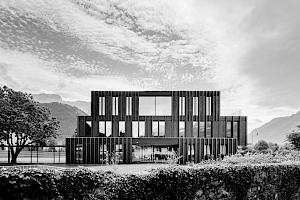
- AWZ housing
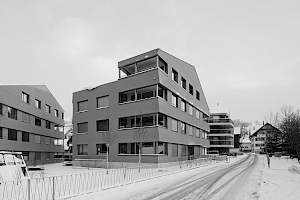
- Uri curative education centre
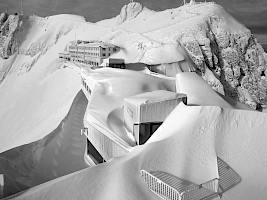
- Pilatus Kulm panorama gallery
- Villa by Lake Zug
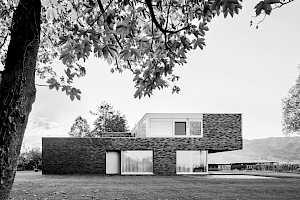
- Villa by Lake Lucerne
- Window factory extension
- Single-family house in Ermensee
- Residential and commercial building
- Sports and multifunctional hall
- Municipal centre / Raiffeisenbank
- Obermarch school centre
- Stucki single-family home
- ProjectsNew Lucerne Theater
- «Paradies» residential buildings
- Tivoli lake restaurant and yacht club
- Transportation headquarter
- Lakeside residence
- Car park with exhibition hall
- Silo tower
- Rowing centre Rotsee
- Refuse incineration plant
- Recycling centre
- Exhibition halls Allmend
- Art Museum Schlossberg
- Place of contemplation
- PublicationsBuildings and Projects
- Window factory extension
- Niklaus Graber & Christoph Steiger Anthologie Bd. 1
Exhibition halls Allmend
| Location | Luzern LU |
| Client | City of Lucerne, LUMAG |
| Commission | Study competition on invitation 2008, 2nd Prize |
| Architects | Graber & Steiger Architekten |
| Consultants | Structural engineer: Dr. Schwartz Consulting |
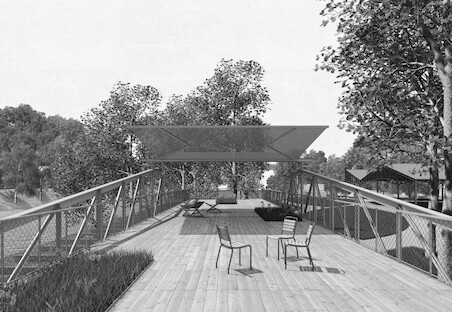
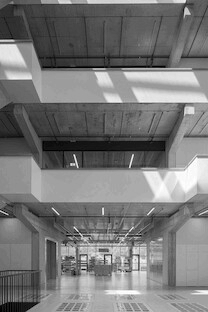
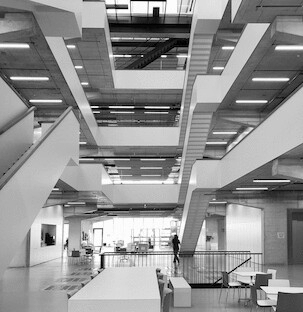
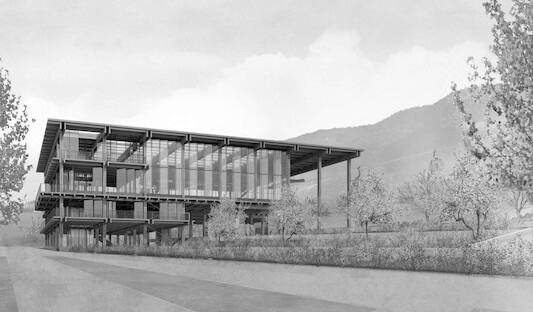
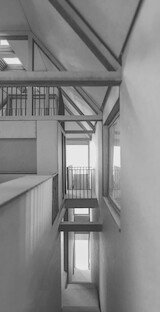
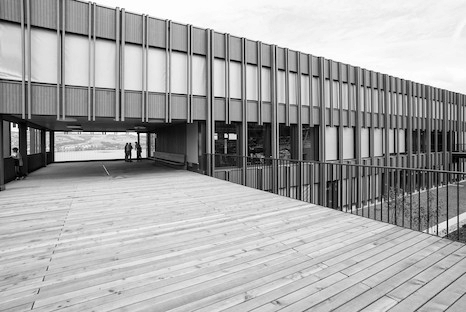
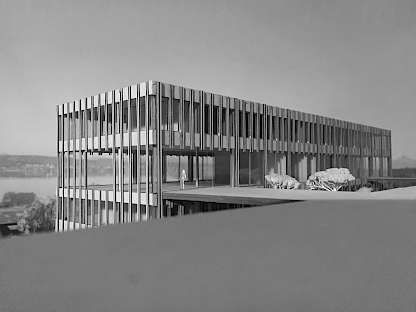
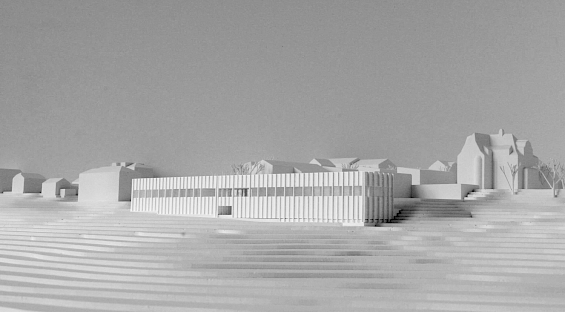
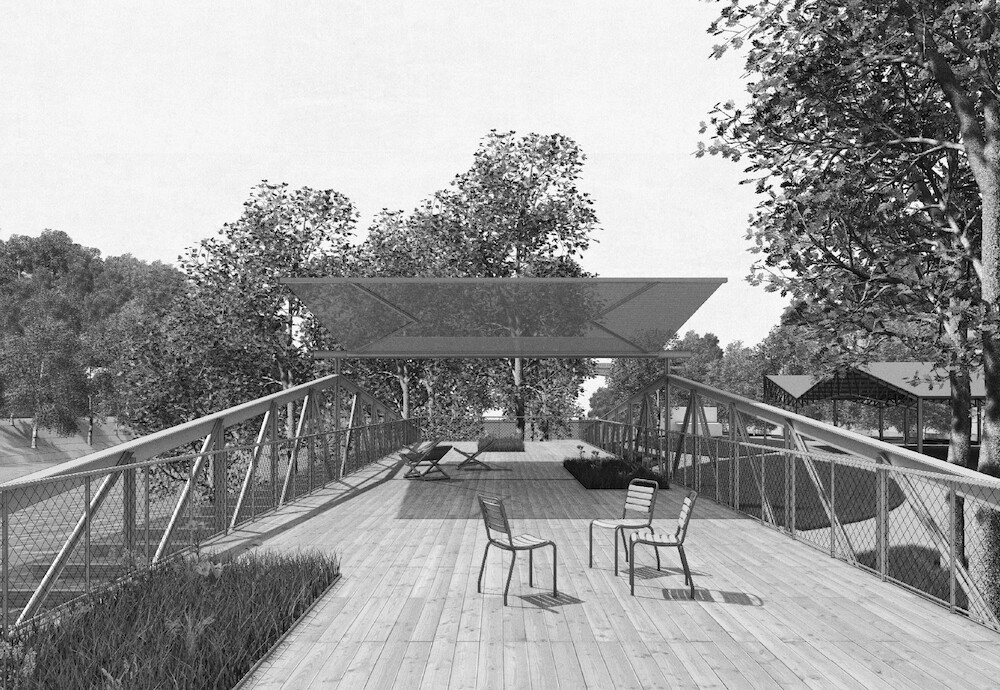
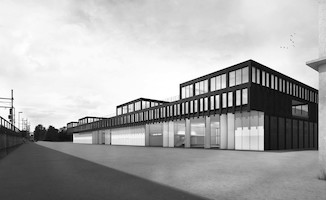
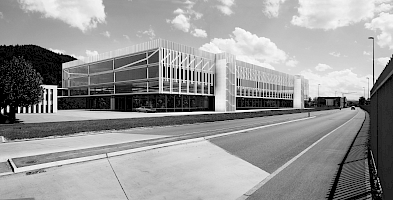
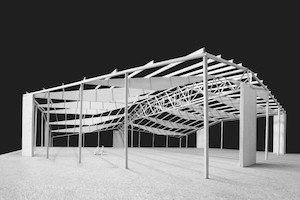
The new trade fair halls at Lucerne’s Allmend develop out of the underlying idea of creating buildings with a high identification factor and an inviting radiance using simple means. Themes such as flexibility and modularity are brought in balance through emotion and a touch of glamour. The recessed position of the halls creates a prestigious front facing the spacious forecourt area where a type of market square can be created. Orthogonal interim spaces arise as a result, evoking depth in an east-west direction, while also addressing the theme of the open space of the Allmend. These partially covered interim spaces, which are accompanied by tent-like arcades, are not just protected locations for the efficient arrival and clearing of trade fair equipment, but are also attractive locations for exterior activities. The balanced load-bearing system of the two halls creates the specific architectural expression of the interior spaces, as well as the exterior appearance, which recalls the original use of the Allmend with temporary, fragile buildings.