- BuildingsMixed-Use Conversion Denkmalstrasse Lucerne
- Vertical Factory Komax AG
- Plant Manager's Home
- Cultural youth centre Schappe Süd
- Primary school
- Residential building Mühle
- Residential building in a tree grove
- Extension for the Thun Panorama
- Single-family home W
- New replacement building Bühlegg
- Stahlton Bauteile AG office building
- AWZ housing
- Uri curative education centre
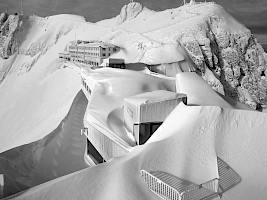
- Pilatus Kulm panorama gallery
- Villa by Lake Zug
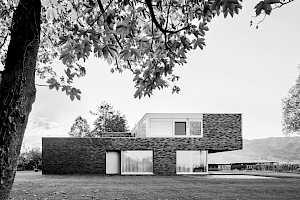
- Villa by Lake Lucerne
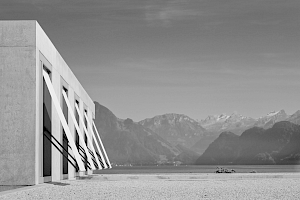
- Window factory extension
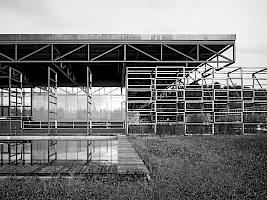
- Single-family house in Ermensee
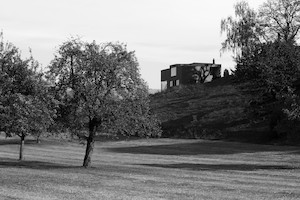
- Residential and commercial building
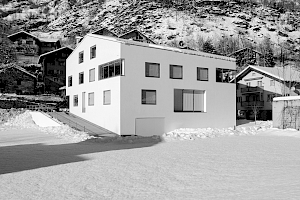
- Sports and multifunctional hall
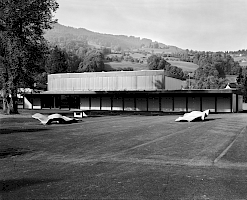
- Municipal centre / Raiffeisenbank
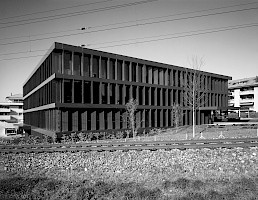
- Obermarch school centre
- Stucki single-family home
- ProjectsNew Lucerne Theater
- «Paradies» residential buildings
- Tivoli lake restaurant and yacht club
- Transportation headquarter
- Lakeside residence
- Car park with exhibition hall
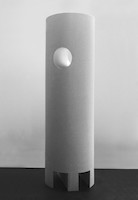
- Silo tower
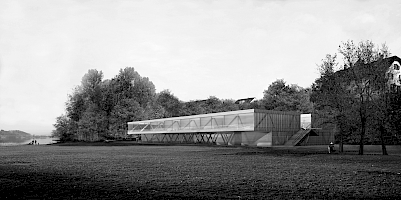
- Rowing centre Rotsee
- Refuse incineration plant
- Recycling centre
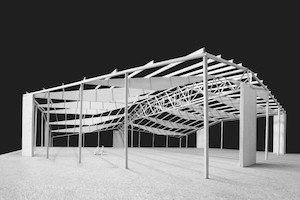
- Exhibition halls Allmend
- Art Museum Schlossberg
- Place of contemplation
- PublicationsBuildings and Projects
- Window factory extension
- Niklaus Graber & Christoph Steiger Anthologie Bd. 1
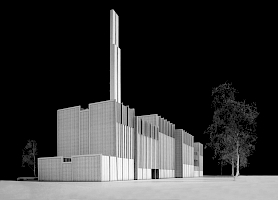
Refuse incineration plant
| Location | Perlen LU |
| Client | Real Luzern |
| Commission | Study competition on invitation 2010 |
| Architects | Graber & Steiger Architekten |
| Consultants | Landscape architect: koepflipartner |
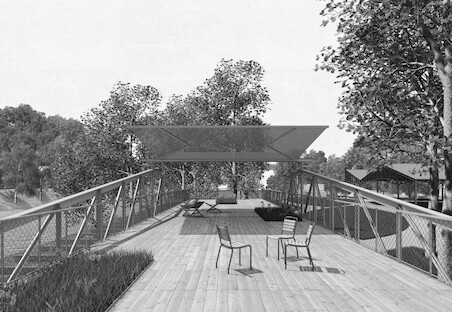
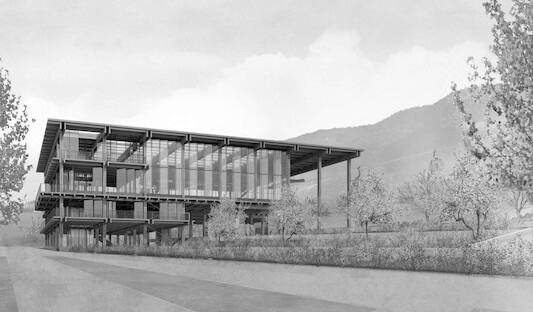
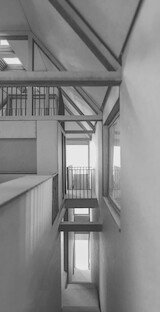
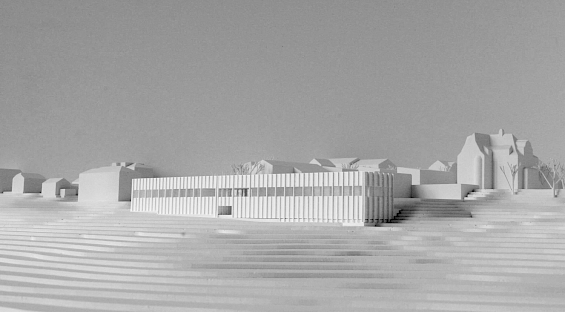
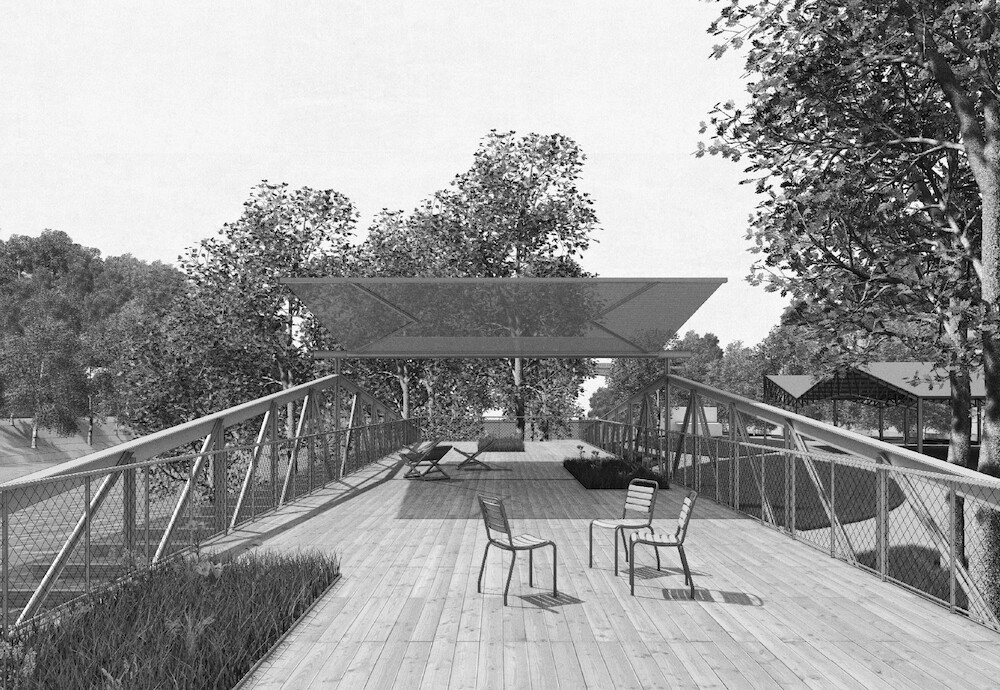
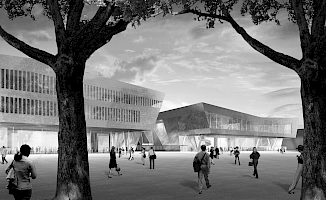
Beginning with the technical processes of the spatial programme, a simple, but powerful typology is created with a timelessly archaic radiance and an openly designed system that can be flexibly used and extended to react to local conditions such as the linear landscape. The serially and successively sequenced operative layout is taken into account, as is the parallel operation of the two process lines, which are clearly aligned along a backbone-like central zone. Out of this «triple-winged» typology, a simple building structure of columns, girders and frames is developed. Set in a regular basic grid, the frame dimensions vary in depth and height depending on the required spatial conditions in individual segments. Through that variation, the structure directly forms the consecutive sections of the inner processes and binds them together through a regular rhythm. The resulting building silhouette appears to be in an oscillating, hovering condition between individual parts and the larger whole, which allows diversely legible scales for the facility.